

A Morocco itinerary 10 days gives travelers enough time to experience many of the country’s most memorable destinations without turning every day into a rushed transfer. In ten days, you can explore modern cities, ancient medinas, the blue streets of Chefchaouen, the cultural heritage of Fes, the Atlas Mountains, the Sahara Desert, dramatic valleys, traditional kasbahs, Ait Ben Haddou, and the lively atmosphere of Marrakech.
Morocco is remarkably diverse. Within a relatively short journey, landscapes can change from Atlantic cities to mountain forests, dry plateaus, palm-filled valleys, golden desert dunes, and historic urban centers. Therefore, planning a logical route is essential. Trying to visit every famous destination in ten days can result in spending more time on the road than actually enjoying the country.
For first-time visitors, one of the most balanced routes is Casablanca → Rabat → Chefchaouen → Fes → Merzouga → Dades Valley → Ait Ben Haddou → Marrakech. This route follows a natural direction across the country and includes a combination of culture, history, landscapes, food, architecture, and desert experiences.
This complete 10 day Morocco itinerary explains what to do each day, what to expect from the journey, where the major highlights are, how transportation affects the route, what to pack, when to visit, and how to make the most of ten days in Morocco.
Is 10 Days Enough for Morocco?
Ten days is a very good amount of time for a first trip to Morocco. It is long enough to visit several important destinations while still allowing more than a few hours in the country’s major historic cities.
However, ten days is not enough to see everything. Morocco has imperial cities, Atlantic beaches, Mediterranean towns, desert regions, mountain villages, valleys, and numerous historic sites. Therefore, travelers should resist the temptation to add every popular destination to the same itinerary.
A successful Morocco itinerary 10 days focuses on a route that connects naturally. This reduces unnecessary backtracking and creates more time for sightseeing, meals, photography, and rest.
For example, combining Casablanca, northern Morocco, Fes, the Sahara, and Marrakech works because the route progresses gradually across different regions instead of repeatedly returning to the same city.
Morocco Itinerary 10 Days at a Glance
A balanced first-time itinerary can follow this route:
- Day 1: Arrival in Casablanca
- Day 2: Casablanca – Rabat – Chefchaouen
- Day 3: Chefchaouen – Fes
- Day 4: Full Day in Fes
- Day 5: Fes – Ifrane – Middle Atlas – Merzouga
- Day 6: Merzouga and Sahara Desert Experience
- Day 7: Merzouga – Todra Gorge – Dades Valley
- Day 8: Dades Valley – Ouarzazate – Ait Ben Haddou – Marrakech
- Day 9: Full Day in Marrakech
- Day 10: Marrakech and Departure
This route is active but realistic for travelers who want to see several parts of Morocco during one journey.
Day 1: Arrival in Casablanca
Your Morocco itinerary 10 days can begin in Casablanca, one of the country’s main international gateways.
Casablanca is Morocco’s largest city and a major economic center. It feels noticeably different from the ancient medinas and desert landscapes that many travelers imagine before arriving in Morocco. Modern avenues, coastal neighborhoods, restaurants, offices, and contemporary architecture create a more urban introduction to the country.
If your flight arrives early enough, use the first day to recover from travel and explore a few highlights rather than immediately beginning a long road journey.
Explore Casablanca at a Relaxed Pace
The first day should remain flexible, particularly after an international flight.
Depending on your arrival time, you can explore part of the city, walk along the coast, enjoy your first Moroccan meal, or visit one major landmark.
The Hassan II Mosque is one of Casablanca’s most recognizable architectural landmarks. Its position near the Atlantic gives the surrounding area a distinctive atmosphere.
Travelers interested in architecture and photography may want additional time around the exterior and coastal surroundings.
However, avoid packing too many activities into the arrival day. You will have a full journey ahead, so beginning the trip well rested is more valuable than trying to complete an extensive sightseeing list.
First Moroccan Dinner
Your first evening is also an opportunity to begin discovering Moroccan cuisine.
Common dishes may include tagines, couscous, salads, grilled meats, soups, and traditional bread. Different regions have their own variations, so food can become an interesting part of the journey rather than simply a necessity between sightseeing stops.
After dinner, return to your accommodation and prepare for the journey north the following day.
Day 2: Casablanca – Rabat – Chefchaouen
The second day combines Morocco’s modern side, political capital, and one of its most photographed mountain towns.
Leave Casablanca in the morning and travel toward Rabat.
Rabat is one of Morocco’s imperial cities and today serves as the national capital. Compared with Marrakech and Fes, it often feels calmer and more spacious, making it a pleasant stop before continuing north.
Discover Rabat
A short visit to Rabat can introduce travelers to another important part of Moroccan history.
Depending on your schedule, you can explore selected historic and architectural sites before continuing the journey.
Rabat combines historic walls, monuments, coastal influences, gardens, and modern administrative areas.
Because your final destination is Chefchaouen, avoid turning the Rabat visit into a full-day sightseeing program. The objective is to experience the city while keeping enough time for the drive north.
Travel Toward Chefchaouen
After Rabat, continue toward the Rif Mountains and Chefchaouen.
The surroundings become more mountainous as you approach the town.
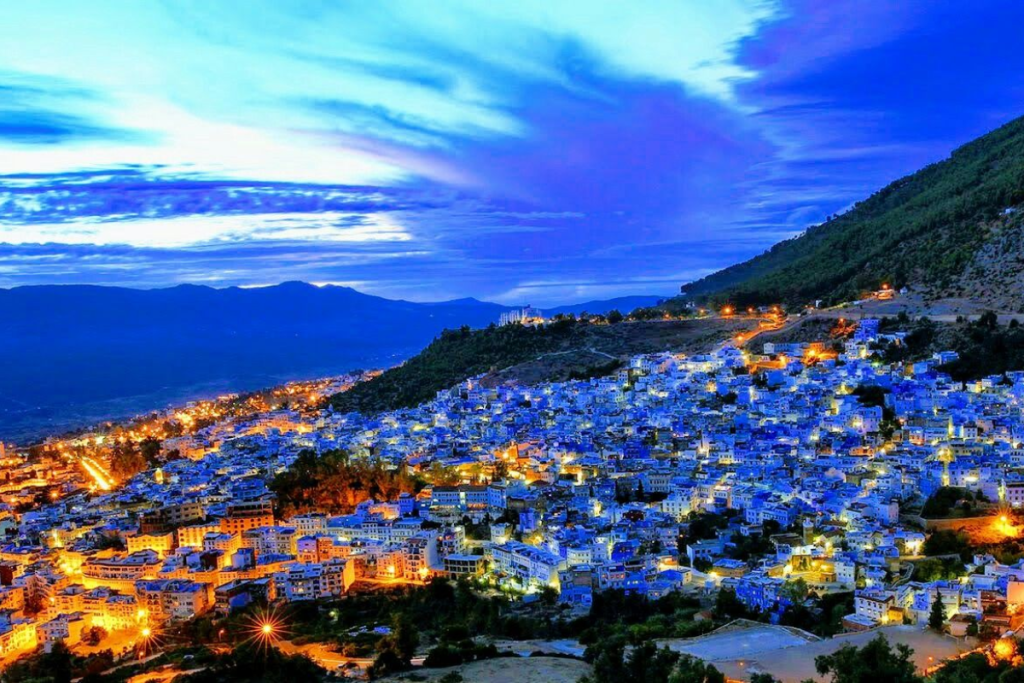
Chefchaouen is famous for its blue-painted streets and buildings. The combination of mountain scenery and colorful architecture gives the town a very different atmosphere from Casablanca and Rabat.
After arriving, check into your accommodation and explore the medina at a relaxed pace.

Evening in the Blue City
Chefchaouen is ideal for walking.
Its medina is smaller than those of Fes or Marrakech, making it easier to explore without a complicated schedule.
Walk through blue alleys, small squares, local shops, and residential streets.
Photography is one of the major attractions, but visitors should remember that many of the most attractive streets are also places where local residents live.
Ask before taking close photographs of people, and avoid blocking narrow doorways or streets.
Finish the evening with dinner and enjoy the slower atmosphere of the Rif Mountains.
Day 3: Chefchaouen – Fes
Spend the morning exploring Chefchaouen before traveling toward Fes.
A slower morning gives you the opportunity to see the town in different light and enjoy the streets before continuing to one of Morocco’s most important cultural cities.
Morning Walk Through Chefchaouen
Start with a walk through the medina.
Look beyond the most famous blue walls and observe architectural details, local shops, stairways, doors, and mountain views.
Interesting photography subjects include:
- Blue-painted streets
- Traditional doors
- Small squares
- Local crafts
- Mountain backgrounds
- Decorative details
- Quiet residential lanes
However, avoid turning the morning into a race between photography locations.
Chefchaouen is most enjoyable when explored slowly.
Continue to Fes
Later, travel toward Fes.
The scenery changes again as you leave the Rif region.
Fes is one of Morocco’s historic imperial cities and one of the cultural highlights of this 10 day Morocco itinerary.
Arriving in the afternoon or evening allows you to settle into your riad before dedicating the next day to a more complete exploration.
Stay in a Traditional Riad
Fes is a good place to experience a traditional riad.
Many riads are historic houses organized around an interior courtyard and decorated with Moroccan architectural elements.
Because many accommodations in the historic medina cannot be reached directly by car, ask in advance about luggage assistance or the closest meeting point.
Spend the evening resting or exploring the area immediately around your accommodation.
Day 4: Full Day Exploring Fes
Fes deserves a full day.
Its medina is one of the most important historic urban environments in Morocco, filled with narrow streets, markets, crafts, religious buildings, traditional homes, food stalls, workshops, and centuries of history.
For first-time visitors, a local guide can make the experience easier because the medina is large and its network of lanes can be difficult to navigate.
Explore Fes el-Bali
Fes el-Bali is the historic heart of the city.
Walking through its streets is one of the best cultural experiences in Morocco.
Unlike a modern tourist attraction, the medina remains a living neighborhood where people shop, work, study, eat, and live.
As you explore, you may encounter small bakeries, artisans, food stalls, traditional fountains, historic buildings, mosques, shops, workshops, and covered markets.
The variety can feel overwhelming at first, so a slower pace helps.
Traditional Crafts of Fes
Fes has a strong tradition of craftsmanship.
Artisans may work with:
- Leather
- Ceramics
- Wood
- Metal
- Textiles
- Decorative plaster
- Traditional tilework
Observing workshops provides context for many of the decorative objects and architectural styles seen throughout Morocco.
If you want to buy handmade products, compare quality rather than purchasing immediately at the first shop.
Visit the Tanneries
Traditional leather tanneries are among the most recognizable sights in Fes.
Visitors often observe the working areas from nearby terraces.
The scene can be visually impressive, but remember that these remain active workplaces.
Respect the people working below and avoid treating them simply as part of a tourist display.
Experience Moroccan Food in Fes
Fes is also an excellent city for exploring Moroccan cuisine.
Take time for lunch rather than trying to walk continuously through the medina.
A slower meal provides a break from the crowds and allows you to experience another part of local culture.
In the evening, return to your accommodation and prepare for the long journey toward the Sahara.
Day 5: Fes – Ifrane – Middle Atlas – Merzouga
Day five is one of the most scenic road journeys of the entire itinerary.
Leaving Fes, the route heads south toward the Middle Atlas before continuing into increasingly dry landscapes and eventually reaching the Sahara region.
This is a long travel day. However, the scenery changes repeatedly, so the drive should be considered part of the experience.
Stop Around Ifrane and the Middle Atlas
The route from Fes passes through the Middle Atlas.
Depending on the itinerary and road conditions, stops may be possible in or near towns such as Ifrane or natural areas farther along the journey.
The mountain environment offers a striking contrast with the medina of Fes.
Forested areas, mountain scenery, towns, agricultural landscapes, and rocky terrain gradually replace the historic city.
Journey South
As you travel farther south, the landscape begins to change significantly.
Green mountain environments gradually give way to wider valleys, dry plateaus, palm-filled areas, and increasingly arid scenery.
For many travelers, watching this transformation is one of the most interesting parts of a Morocco Private Tour.
Instead of suddenly arriving in the desert by plane, you see how Morocco’s geography changes from one region to another.
Arrival in Merzouga
Eventually, you reach Merzouga, a settlement near the Erg Chebbi dunes.
The first view of large dunes is often one of the most memorable moments of the journey.
Depending on your chosen experience and arrival time, you may travel toward a desert camp or stay in accommodation near the dunes.
The exact schedule should remain flexible because desert activities can depend on weather, season, and local conditions.
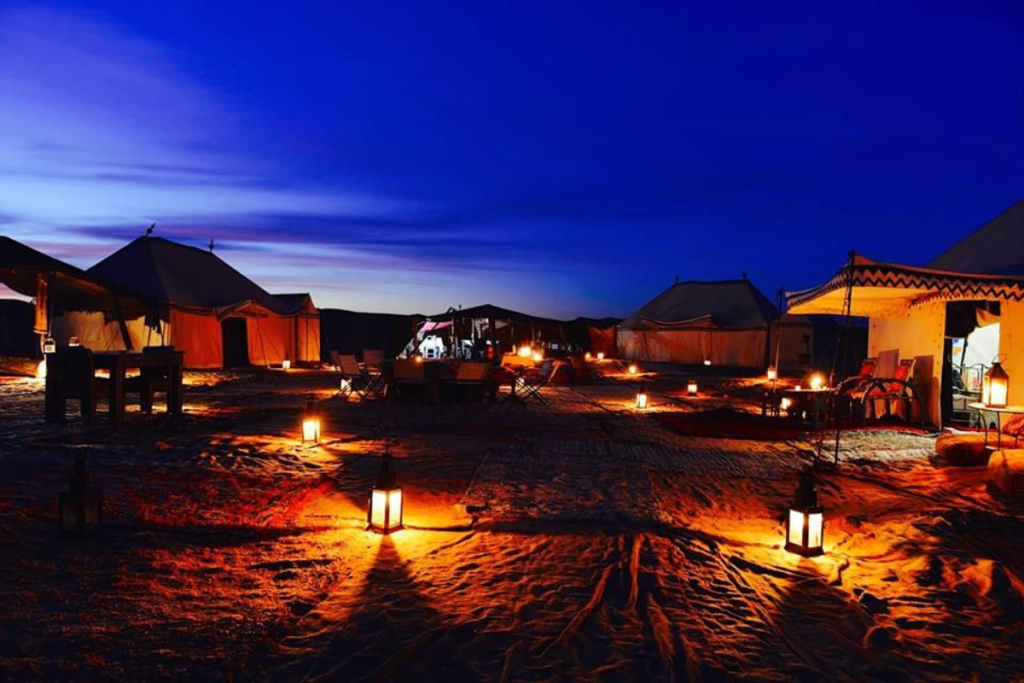
Sunset in the Sahara
If conditions allow, experience the dunes around sunset.
The light can transform the sand from pale gold to deeper orange and reddish tones.
Some itineraries include camel riding or other organized desert transfers.
After sunset, continue to your accommodation or camp.
Dinner and a quiet evening in the desert create a dramatic contrast with the busy medinas of Fes and Chefchaouen.
Day 6: Merzouga and Sahara Desert Experience
One advantage of a 10 day Morocco itinerary compared with a shorter seven-day route is that you can dedicate more time to the desert instead of immediately leaving Merzouga the next morning.
A full day gives travelers the opportunity to appreciate the region beyond a single sunset photograph.
Sunrise Near the Dunes
Travelers who enjoy early mornings may wake up for sunrise.
Conditions change from day to day, but the early light can create beautiful colors and shadows across the dunes.
Afterward, return for breakfast and begin exploring the wider region.
Discover the Merzouga Area
The Sahara experience is not limited to sand dunes.
The wider region contains desert landscapes, small communities, rocky terrain, palm areas, and cultural traditions associated with southeastern Morocco.
Depending on your tour, the day may include visits to local communities, panoramic areas, or other nearby landscapes.
A slower day also provides valuable rest after the long drive from Fes.
Photography in the Sahara
Photographers should look beyond wide dune panoramas.
Interesting subjects can include:
- Wind patterns in the sand
- Shadows along dune ridges
- Small desert plants
- Footprints
- Changing light
- Distant landscapes
- Traditional architecture around the region
Protect cameras from sand and dust.
For many travelers, a smartphone or compact camera is more convenient than carrying heavy photography equipment through the dunes.
Second Evening in the Desert
A second evening in the region gives you another opportunity to experience sunset without feeling rushed.
Weather and light change daily, so the atmosphere may be completely different from the previous evening.
After dinner, enjoy the calm desert environment and prepare for the journey toward the Todra and Dades regions.
Day 7: Merzouga – Todra Gorge – Dades Valley
After breakfast, leave Merzouga and travel west.
The seventh day introduces another series of landscapes: rocky plateaus, palm-filled valleys, mountain formations, traditional villages, and dramatic gorges.
The transition demonstrates why southeastern Morocco should not be described simply as “the desert.”
Travel Through Oasis Landscapes
As you leave the dunes, the scenery becomes increasingly varied.
Dry terrain is interrupted by green palm groves and agricultural areas.
This contrast between arid landscapes and vegetation supported by water sources is one of the most characteristic features of southern Morocco.
Along the route, you may pass villages and towns where traditional earth-toned architecture blends with the surrounding landscape.
Visit Todra Gorge
One of the main stops of the day is Todra Gorge.
Its dramatic rock walls create one of the region’s most recognizable natural landscapes.
A walking stop provides a welcome break from the vehicle.
Take time to look upward at the cliffs and observe the relationship between the rock formations, road, water, and human activity below.
Photography conditions vary depending on light and time of day.
Continue Toward Dades Valley
After Todra, continue toward the Dades Valley.
The region contains unusual geological formations, traditional settlements, valleys, mountain roads, and historic architecture.
Rather than stopping at every viewpoint, choose a few that provide genuinely different perspectives.
Too many short roadside stops can make the day feel longer without necessarily adding much value.
Overnight in the Dades Region
Spend the night in or around the Dades Valley.
A local guesthouse or hotel can provide a quieter evening after several days of travel.
Enjoy dinner, rest, and prepare for one of the most culturally interesting travel days of the itinerary.
Day 8: Dades Valley – Ouarzazate – Ait Ben Haddou – Marrakech
Day eight connects the landscapes of southeastern Morocco with Marrakech.
Along the route, you pass valleys, traditional architecture, the Ouarzazate region, Ait Ben Haddou, and the High Atlas Mountains.
This is a long but rewarding day.
Southern Morocco and the Road of Kasbahs
The architecture along the route is one of its most distinctive features.
Earthen villages and fortified structures blend naturally with the surrounding landscape.
The colors of buildings often resemble the mountains and soil.
For travelers interested in Morocco Photography Tours, the region offers excellent opportunities for wide compositions combining architecture, valleys, mountains, and palm groves.
Stop in the Ouarzazate Region
Ouarzazate is widely associated with southern Morocco and international film production.
Depending on your interests and schedule, the area can be included as a short stop before continuing toward Ait Ben Haddou.
Travelers particularly interested in cinema may want to dedicate more time here, while others may prefer to focus on the historic ksar.
Explore Ait Ben Haddou
Ait Ben Haddou is one of Morocco’s most recognizable historic settlements.
Its traditional earthen architecture, defensive walls, towers, passageways, and elevated viewpoints make it one of the highlights of the journey.
Rather than simply stopping for a photograph, take time to walk through the ksar.
Comfortable footwear is recommended because some paths can be uneven.
Understanding the Ksar
A ksar is a fortified settlement rather than one single building.
Understanding this helps travelers appreciate the architecture in greater depth.
Look at how the buildings are grouped together and how defensive structures, narrow lanes, residences, and communal spaces form part of a larger settlement.
Ait Ben Haddou is especially rewarding for travelers interested in history, architecture, heritage, and photography.
Cross the High Atlas Mountains
After leaving Ait Ben Haddou, continue across the High Atlas toward Marrakech.
The mountain journey creates another dramatic change of scenery.
The dry landscapes of southern Morocco gradually give way to mountain terrain before the road eventually descends toward Marrakech.
Road and weather conditions may affect the journey, so remain flexible with arrival time.
Once in Marrakech, check into your riad or hotel and enjoy a relaxed evening.
Day 9: Full Day in Marrakech
Marrakech is one of the most visited destinations in Morocco and deserves at least one full day.
The city combines historic architecture, markets, gardens, food, traditional accommodation, modern restaurants, and a lively street atmosphere.
After several days of long-distance travel, day nine allows you to explore primarily on foot.
Explore the Medina
Begin inside the historic medina.
The narrow streets contain souks, workshops, shops, cafés, riads, restaurants, and traditional buildings.
For travelers who enjoyed the medina of Fes, Marrakech provides an interesting comparison.
The atmosphere is different, and tourism plays a more visible role in many central areas.
Visit Jemaa el-Fna
Jemaa el-Fna is one of the city’s most recognizable public spaces.
The atmosphere changes throughout the day.
The square connects with surrounding markets and streets, making it a useful reference point when exploring central Marrakech.
Rooftop cafés around the area can provide broader views of the city.
As in any crowded tourist area, pay attention to personal belongings.
Explore the Marrakech Souks
The markets offer a wide variety of goods.
Travelers may encounter:
- Leather products
- Lamps
- Spices
- Ceramics
- Carpets
- Textiles
- Jewelry
- Decorative objects
Browsing is part of the experience.
Do not feel obligated to purchase something simply because you enter a shop.
Compare quality and prices when considering an important purchase.
Gardens, Palaces, and Architecture
Marrakech contains numerous gardens and historic buildings.
Instead of trying to visit every attraction, choose a few that genuinely interest you.
A balanced day may include one historic attraction in the morning, lunch, time in the souks, another cultural or garden visit, and an evening around the medina.
This creates a better rhythm than moving continuously between ticketed attractions.
Evening in Marrakech
Spend the evening exploring the city as the atmosphere changes.
Restaurants, rooftops, cafés, and public spaces can feel very different after sunset.
This is also a good time to enjoy a longer Moroccan dinner after several travel-heavy days.
Day 10: Marrakech and Departure
The final day of your Morocco itinerary 10 days should remain relatively flexible.
If your flight leaves later, use the morning to revisit a favorite part of Marrakech, enjoy breakfast on a terrace, purchase final souvenirs, or explore an attraction you did not have time to see on day nine.
Avoid planning a distant excursion on departure day unless your flight schedule comfortably allows it.
Slow Morning in Marrakech
After nine active days, a slower morning can be enjoyable.
Walk through quieter streets, have coffee or tea, browse local shops, or spend time at your riad.
This also gives you extra flexibility in case previous days experienced minor schedule changes.
Departure
Travel to the airport according to your flight schedule.
If your international departure is from Casablanca instead of Marrakech, plan the transfer carefully and consider whether an additional overnight stay closer to the airport is more practical.
Open-jaw flights—arriving in one Moroccan city and departing from another—can reduce unnecessary backtracking on a multi-city itinerary.
Why This Morocco Itinerary 10 Days Works
This route offers a broad introduction to Morocco because it combines several different travel experiences.
The itinerary includes:
- Modern Casablanca
- Historic Rabat
- Blue Chefchaouen
- Cultural Fes
- Middle Atlas landscapes
- Sahara dunes
- Merzouga
- Todra Gorge
- Dades Valley
- Ait Ben Haddou
- High Atlas Mountains
- Marrakech
However, the destinations follow a logical direction rather than being selected randomly.
As a result, travelers experience the gradual transition between Morocco’s different regions.
Alternative 10 Day Morocco Itineraries
The route above is ideal for many first-time visitors, but it is not the only way to spend ten days in Morocco.
Your arrival city, interests, season, and preferred travel pace should determine the final route.
10 Days Focused on Marrakech and the Sahara
Travelers who want fewer city changes can focus on Marrakech and southern Morocco.
A route may include Marrakech, Ouarzazate, Ait Ben Haddou, Dades Valley, Todra Gorge, Merzouga, desert experiences, and a return toward Marrakech.
This can provide more time in the south and reduce the need to travel all the way to Chefchaouen.
It is a particularly good option for visitors mainly interested in Morocco Desert Tours.
10 Days from Casablanca
Travelers arriving in Casablanca can follow the main route described in this guide.
Casablanca works especially well as the starting city because it connects naturally with Rabat and northern Morocco before continuing to Fes and the Sahara.
A trip can then finish in Marrakech.
10 Days from Marrakech
If you arrive and depart from Marrakech, you may want a circular route.
However, adding Chefchaouen and northern Morocco creates substantial extra travel.
Instead, consider focusing on Marrakech, the Sahara, Fes, and nearby regions.
A more concentrated route often results in better sightseeing and less time in the vehicle.
10 Days for Photography
Photography-focused travelers may want to reduce the number of destinations.
Locations such as Chefchaouen, Fes, Merzouga, Dades Valley, Ait Ben Haddou, and Marrakech offer excellent opportunities.
A private driver can be particularly useful for photographers because interesting light and scenery do not always appear according to a group tour schedule.
Private Tour or Independent Travel?
Both options can work for a 10 day Morocco itinerary.
The best choice depends on budget, travel experience, group size, and the destinations you want to reach.
Morocco Private Tours
A private tour can simplify a complex itinerary.
Benefits may include:
- Private transportation
- Flexible stops
- Easier luggage handling
- Hotel and riad transfers
- Route coordination
- More control over the pace
This can be particularly useful for families, couples, photographers, and small groups.
However, always confirm exactly what the service includes.
A driver and a licensed local guide are not automatically the same service.
Independent Travel
Independent travelers can use trains, buses, taxis, rental cars, and organized desert tours.
Major cities are easier to connect independently than remote valleys or desert locations.
Therefore, some travelers combine methods—for example, using trains between cities and booking an organized tour for the Sahara section.
Where to Stay During Your Morocco Itinerary
Accommodation can become part of the travel experience.
Over ten days, you may stay in modern hotels, riads, guesthouses, and desert camps.
Riads
Riads are especially popular in cities such as Fes and Marrakech.
These traditional houses often feature central courtyards and Moroccan decorative details.
Because many riads are deep inside pedestrian medinas, ask about luggage support and pickup arrangements.
Desert Camps
The Merzouga area offers different desert-camp experiences.
Standards vary considerably.
Before booking, confirm:
- Tent type
- Bathroom arrangements
- Meals
- Transportation
- Activities
- Location
Do not assume every accommodation described as “luxury” offers identical facilities.
Guesthouses
Guesthouses work particularly well in regions such as Dades.
They can provide a quieter and more personal overnight experience than large hotels.
Moroccan Food During the Trip
Food changes throughout the route and can become an important part of the experience.
Common dishes include tagines, couscous, soups, salads, grilled meats, bread, pastries, and tea.
Regional variations mean that eating the same basic dish in different cities can still produce different experiences.
Eating in Fes and Marrakech
Large cities provide the widest selection of dining options.
You can find traditional Moroccan restaurants, street food, cafés, contemporary restaurants, and international cuisine.
Balance sightseeing with relaxed meals.
A ten-day trip becomes tiring if every meal is rushed.
Food During Road Trips
Travel days often involve restaurants in smaller towns or tourist areas.
If you have dietary restrictions, tell your driver, guide, or restaurant staff clearly.
For serious allergies, specify the exact ingredient that must be avoided.
What to Pack for 10 Days in Morocco
A ten-day route crosses several different environments.
Packing layers is therefore more useful than bringing clothing for only one climate.
Useful items include:
- Comfortable walking shoes
- Lightweight clothing
- Warm layer
- Sunglasses
- Hat
- Sunscreen
- Small backpack
- Portable charger
- Personal medication
- Reusable water bottle
- Camera or smartphone
- Travel documents
Avoid bringing too much luggage.
You may change accommodation several times, and lighter bags make transfers much easier.
What to Wear in Morocco
Visitors should prioritize comfort and practicality.
Morocco is accustomed to international tourism, especially in major destinations.
Nevertheless, modest clothing is generally a respectful and practical choice.
Loose clothing can also be more comfortable in warm weather.
Mountain and desert temperatures can change between day and evening, so an additional layer is useful.
Comfortable walking shoes are particularly important in medinas, gorges, historic settlements, and uneven areas.
Best Time for a Morocco Itinerary 10 Days
Morocco can be visited throughout much of the year.
However, conditions vary significantly between the north, mountains, cities, and Sahara.
Spring
Spring can offer comfortable conditions across many parts of the route.
Temperatures may be pleasant for walking and sightseeing.
Depending on rainfall, some landscapes may also appear greener.
Summer
Summer can become very hot in inland and desert regions.
Travelers should prepare carefully for heat.
Sun protection, water, lighter clothing, and early sightseeing become especially important.
Autumn
Autumn can provide comfortable temperatures after the strongest summer heat.
It can be a good period for a route that combines cities and desert regions.
Nevertheless, check current conditions before traveling.
Winter
Winter can be pleasant in some cities and desert areas during the day, but mountain regions can be much colder.
Bring suitable layers and pay attention to weather when crossing mountain routes.
Transportation During a 10 Day Morocco Trip
Transportation can determine whether your itinerary feels relaxed or exhausting.
Private Driver
A private driver is one of the simplest ways to complete a multi-region route.
It provides flexibility and makes it easier to stop at viewpoints or smaller destinations.
However, compare operators carefully and confirm the exact services provided.
Train
Trains connect several major Moroccan cities.
They can work well for travelers focusing on urban destinations.
However, rail services do not reach many of the valleys, desert areas, and rural stops included in this itinerary.
Bus
Buses connect numerous Moroccan destinations.
They can be useful for budget-conscious and independent travelers.
However, using multiple bus connections can consume valuable time during a ten-day trip.
Common Mistakes When Planning 10 Days in Morocco
Trying to Visit Too Many Destinations
Adding more cities does not necessarily create a better trip.
Travelers should have enough time to actually experience each destination.
Ignoring Driving Time
Road conditions, mountain routes, sightseeing stops, and traffic all affect travel times.
Do not plan a strict evening activity after every long driving day.
Changing Hotels Every Night
Constant hotel changes can become tiring.
This itinerary includes a few longer stays to make the journey more balanced.
Booking Without Checking Inclusions
Compare Morocco Tour Packages based on what is included, not only price.
Ask about accommodation, meals, transportation, guides, activities, desert camps, and entrance fees.
Packing Too Much
Large suitcases make frequent transfers more difficult.
Pack enough for ten days without carrying unnecessary items.
Morocco Itinerary 10 Days for Families
A ten-day route can work well for families if the itinerary includes enough breaks.
Children may enjoy the desert, dunes, camels, mountains, colorful streets, traditional buildings, and different environments.
However, long driving days require planning.
Private transportation can provide greater flexibility for rest stops and meals.
Families should avoid adding unnecessary destinations simply to create a longer sightseeing list.
Morocco Itinerary 10 Days for Couples
Couples can enjoy a wide range of experiences during the trip.
Riads, Sahara landscapes, mountain scenery, rooftops, historic medinas, and quiet guesthouses provide considerable variety.
A private itinerary can also provide more flexibility and privacy.
Consider leaving some evenings relatively unplanned rather than filling every hour with activities.
Morocco Itinerary 10 Days for Solo Travelers
Solo travelers can complete the route using a combination of public transportation and organized tours.
Shared desert tours may make remote destinations easier to access.
Before joining a group trip, check:
- Group size
- Accommodation arrangement
- Pickup location
- Meal inclusions
- Itinerary
- Transportation style
A little planning can prevent surprises.
Responsible Travel in Morocco
Morocco’s historic cities, villages, and desert communities are living places rather than tourist sets.
Responsible travelers should:
- Ask before photographing people.
- Respect private areas.
- Avoid damaging historic structures.
- Dispose of waste properly.
- Support local businesses when appropriate.
- Follow rules at cultural sites.
- Respect local customs.
Small choices can contribute to a better tourism experience for visitors and communities alike.
Frequently Asked Questions
Is 10 days enough to visit Morocco?
Yes. Ten days is enough to experience several major cities, the Sahara, mountain landscapes, historic sites, and Marrakech. However, you should follow a logical route rather than trying to visit the entire country.
What is the best Morocco itinerary for 10 days?
A popular first-time route is Casablanca, Rabat, Chefchaouen, Fes, Merzouga, Todra Gorge, Dades Valley, Ait Ben Haddou, and Marrakech.
Can I visit the Sahara in 10 days?
Yes. Ten days provides enough time to include Merzouga and even spend more than one night in the desert region without making the entire itinerary excessively rushed.
Should I include Chefchaouen?
Chefchaouen is worthwhile if your route begins in Casablanca, Rabat, Tangier, or northern Morocco. If you start and finish in Marrakech, including Chefchaouen may create too much additional driving.
How many days should I spend in Marrakech?
At least one full day is recommended within a ten-day multi-city itinerary. Travelers who prefer a slower trip may want two or more days.
How many days should I spend in Fes?
A full day is usually the minimum for first-time visitors who want to explore the historic medina. Two nights allow you to arrive, explore the city the next day, and leave the following morning.
Is a private tour better for a 10 day Morocco itinerary?
A private tour can make a multi-region itinerary easier because transportation, luggage, and stops are coordinated. However, independent travel can also work well for experienced travelers.
Can I do this itinerary with children?
Yes, but families should consider the longer road days and adjust the pace according to the age and travel habits of the children.
Final Tips for Planning 10 Days in Morocco
Build your itinerary around geography rather than simply choosing famous places.
Avoid unnecessary backtracking.
Start longer road days early.
Keep some arrival times flexible.
Pack comfortable walking shoes and clothing suitable for changing conditions.
Do not overload every day with attractions.
Take time for meals, cafés, photography, and spontaneous discoveries.
Most importantly, consider the roads between destinations part of the experience.
Morocco’s landscapes change continuously, and some of the most memorable views appear between cities rather than inside them.
Conclusion
A well-planned Morocco offers enough time to experience an impressive range of landscapes, cities, and cultural highlights without turning the entire trip into a race.
Starting in Casablanca and traveling through Rabat, Chefchaouen, Fes, the Middle Atlas, Merzouga, Todra Gorge, Dades Valley, Ait Ben Haddou, and Marrakech creates a natural route through several very different regions of the country.
Over ten days, travelers can walk through historic medinas, photograph blue streets, discover traditional crafts, cross mountain landscapes, experience Sahara dunes, explore dramatic valleys, walk through a historic ksar, and finish among the markets and monuments of Marrakech.
However, the best itinerary is not necessarily the one containing the greatest number of destinations. A successful journey balances sightseeing with realistic travel times and enough space to enjoy each place.
Whether you choose a private journey, one of the available Morocco Tour Packages, or organize the trip independently, plan around your interests, season, arrival city, and preferred travel pace.
With thoughtful planning, a Morocco itinerary 10 days can provide an unforgettable introduction to the country and reveal just how diverse Morocco becomes as you travel from the Atlantic coast and northern mountains to ancient medinas, Sahara landscapes, southern valleys, and the vibrant streets of Marrakech.


